
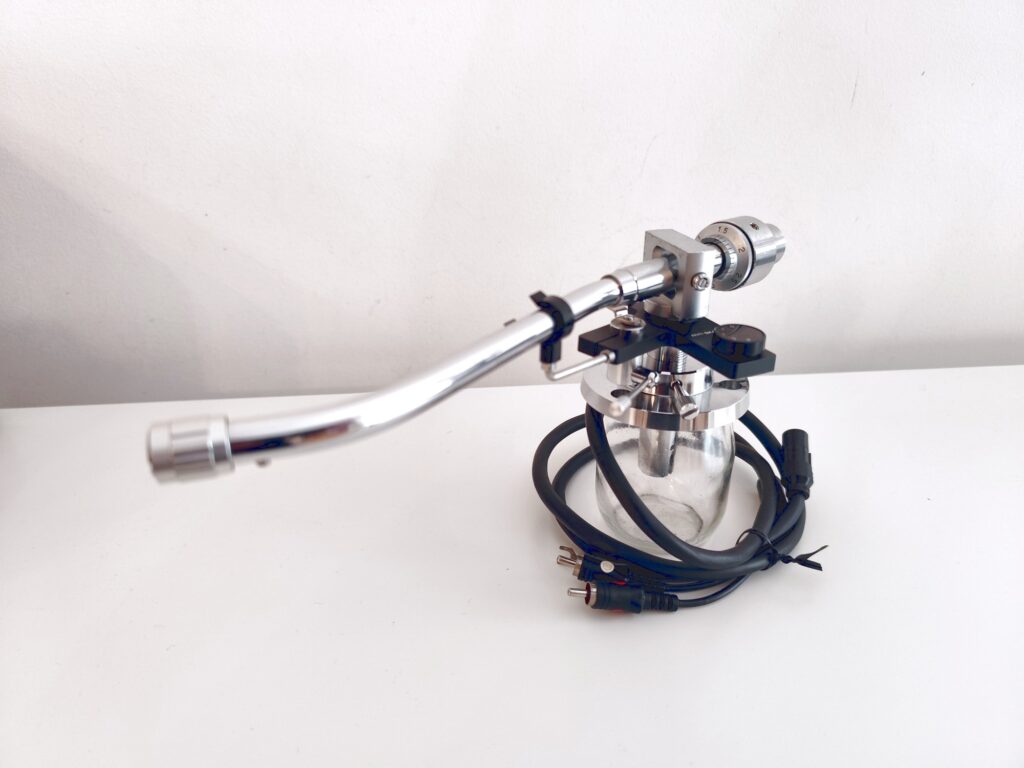
The TA-71 Trio is one of those lesser-known tonearms that ends up surprising those who give it a chance. Designed at a time when Japanese engineering treated vinyl with true mechanical rigour (developed in collaboration with the NHK Technical Research Institute), it is a static balance S-tube tonearm designed to work well with medium compliance cartridges, favouring actual use in domestic systems rather than flashy catalogues.
On paper, the design seems simple: sensible geometry (245 mm effective length), well-chosen mass and a set of basic but complete adjustments. In practice, what you feel is an arm that conveys confidence: the movement is free without play, cueing is smooth and allows VTA adjustment.
There is no unnecessary ornamentation; it is a well-built tonearm with tight tolerances and a serious approach to resonance control, typical of an era when brands such as Trio/Kenwood sought to offer true engineering quality even in their mid-range models.
At a time when many vintage tonearms are reaching prices that are difficult to justify, the TA-71 emerges as a very sensible choice: a classic, solid and musical tonearm.
The Trio TA-71 was originally sold mainly with Trio/Kenwood’s top-of-the-line models from the late 1970s, serving as the reference tonearm for their high-end direct-drive turntables. Key models include the Trio KP-7700 (Japanese/Asian market in 1976) and Kenwood KD-750 (Western export version), both factory-equipped with the TA-71 and sharing the same quartz PLL high-inertia (~550 kg·cm²) ecosystem. Other high-end family members like the KD-550 as an optional upgrade.
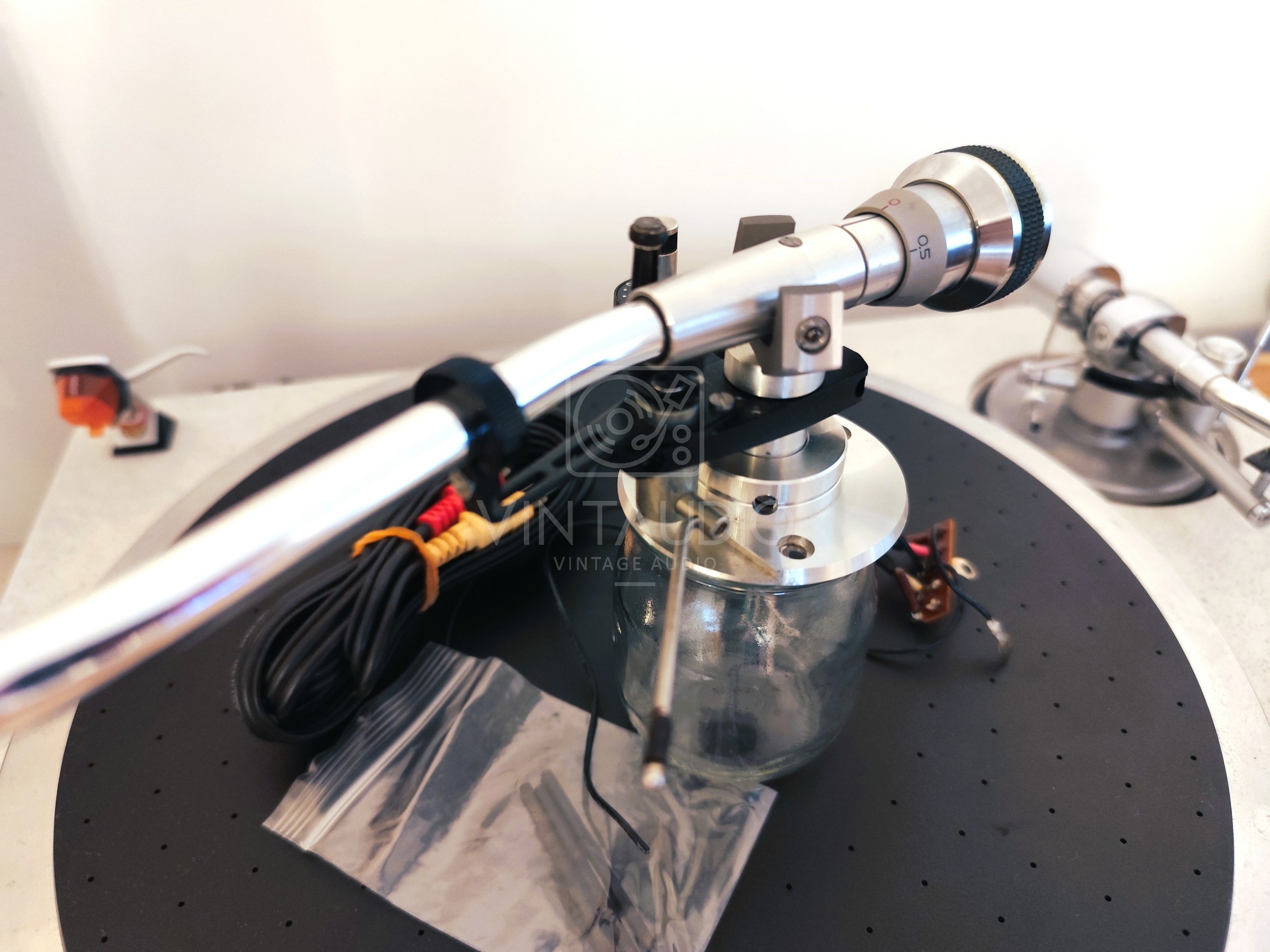
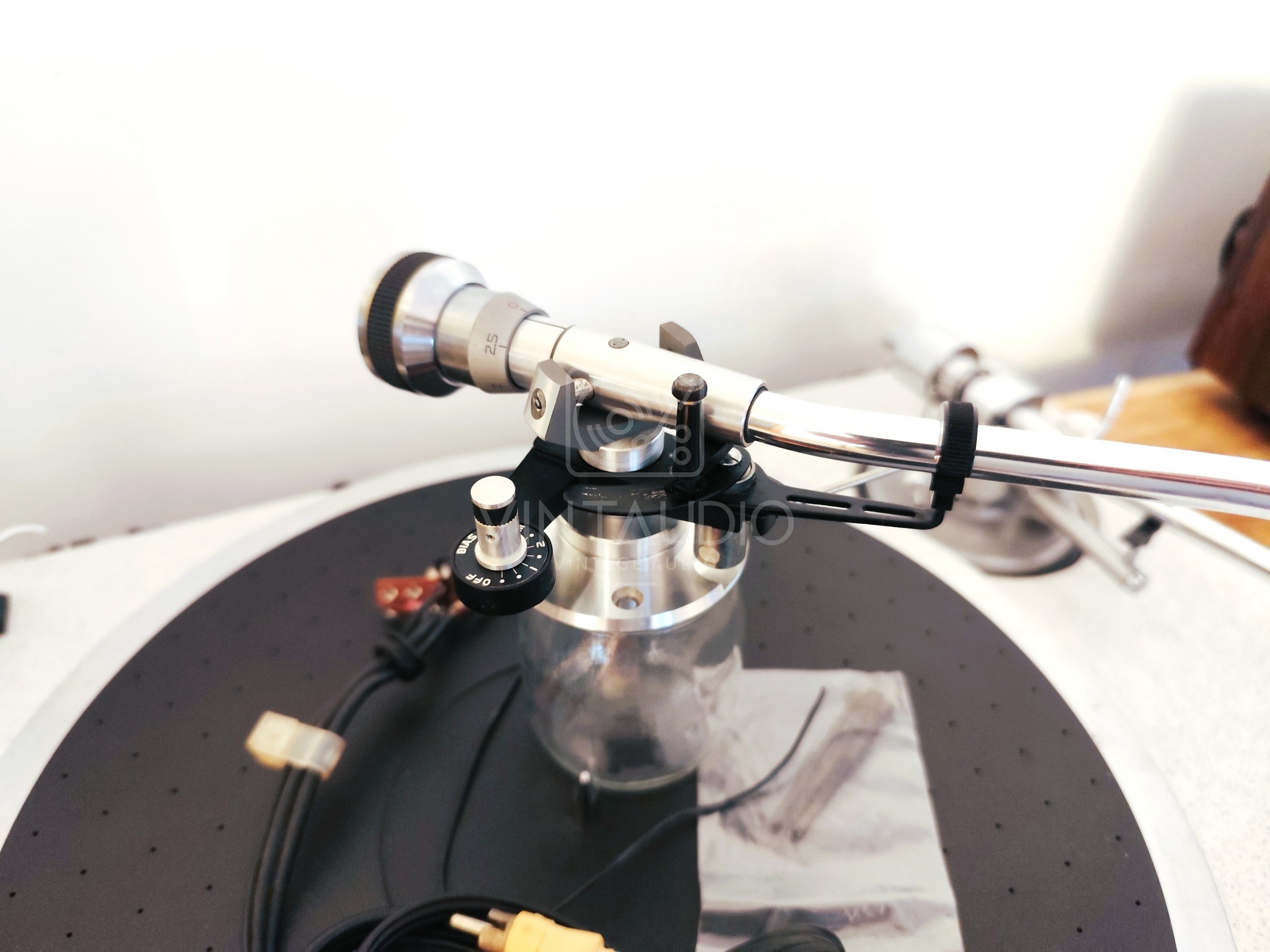
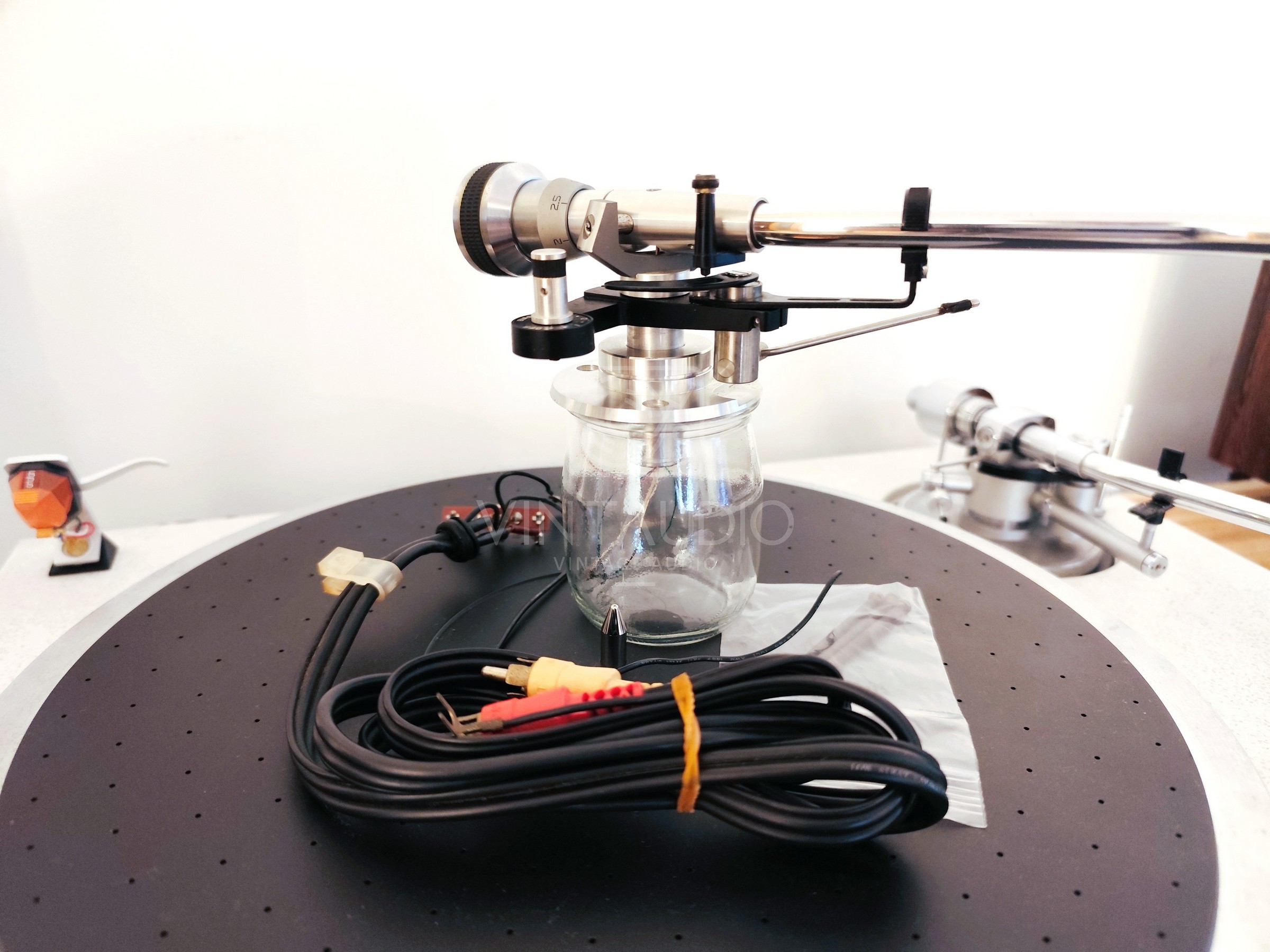
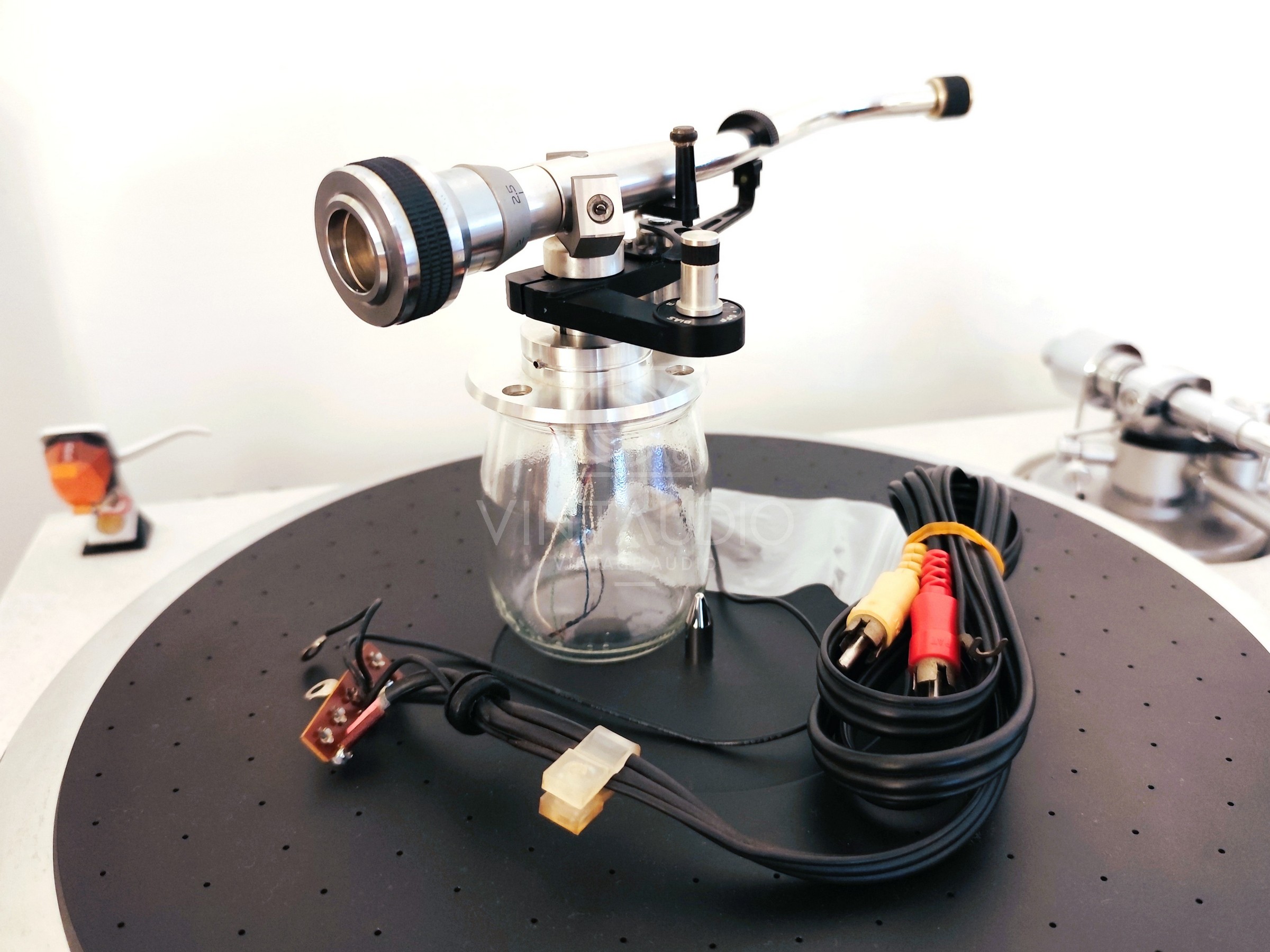
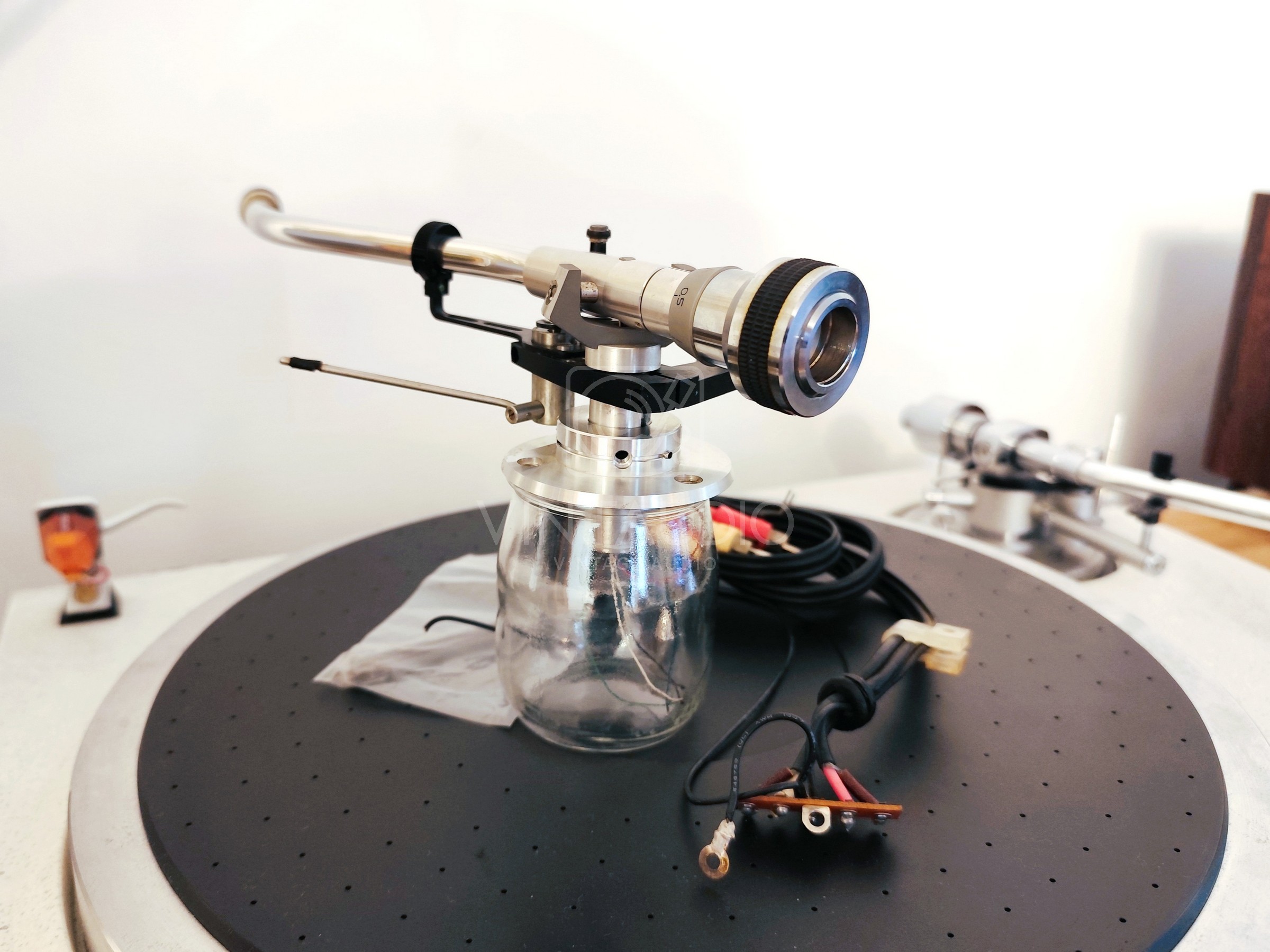
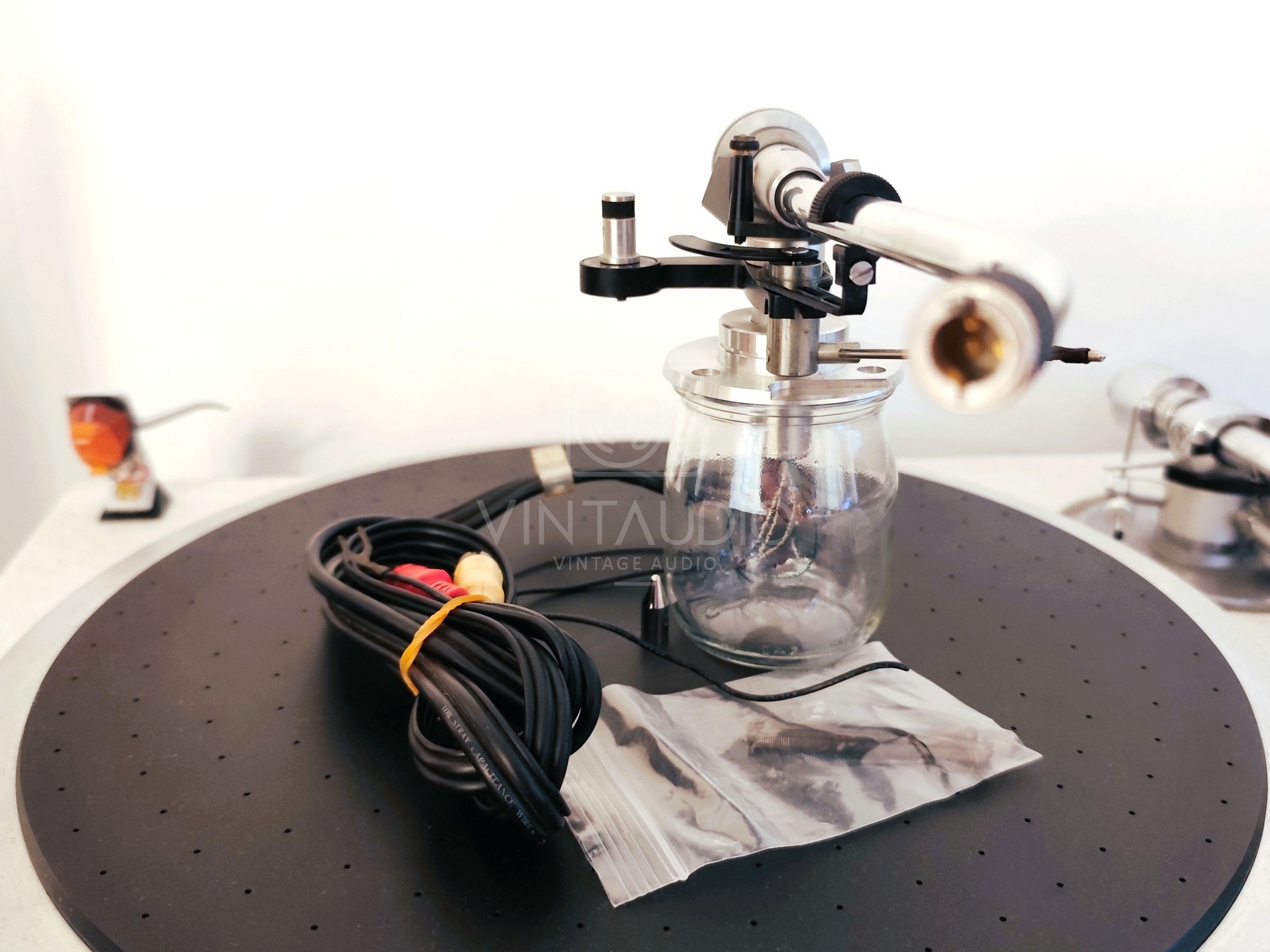
Type: Static balance S-shaped pipe tonearm with elastic coupling mass separation system
Effective length: 245 mm
Overhang: 15 mm
Tracking error: +1.8° to -1.0°
Tracking force adjustment: 0–3.0 g (0.1 g steps)
Cartridge weight range: 4–14 g (with attached headshell)
Attached headshell: 11 g (magnesium alloy die-cast)
Arm height adjustment: 6 mm